
About CLIMAAX
What is the CLIMAAX project?
The KÉZDI_adapt group, part of the European CLIMAAX project (Climate Risk and Vulnerability Assessment Framework and Toolbox), aims to analyze the impact of climate change on the local population, with a special focus on drought, heatwaves, and floods. Târgu Secuiesc is one of 32 regions in Europe selected for this project, along with two others from Romania.
What is the goal of the project?
- assessing the risks of climate change, drought, heatwaves, and floods
- applying strategies to mitigate the risk and impact of extreme weather events
- providing scientific data and analytical tools

What risks does the KÉZDI_adapt group analyze?
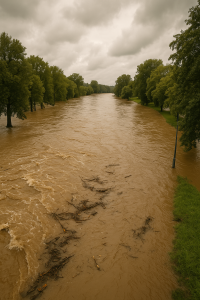
- river flooding – regarding infrastructure and the population
- heatwaves – considering their impact on health and the economy
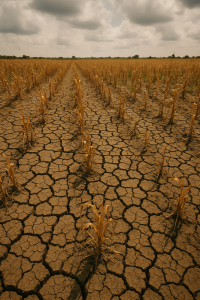
- droughts – in terms of water scarcity and agricultural problems
Why is it important to assess these risks?
The effects of climate change and weather conditions are constantly worsening, and decision-makers need reliable, accurate data and tools in order to take appropriate measures.
Steps of the Climate Risk Assessment (CRA) process:
- Planning: defining objectives and criteria for risk assessment.
- Risk identification: mapping relevant risks based on past experiences and current climate hazards.
- Risk analysis: detailed examination of the identified risks.
- Key risk evaluation: prioritizing the most significant risks.
- Assessment: continuously monitoring and evaluating the effectiveness of risk management measures.
- Information and support:
- unified risk assessment: the CRA process supports comprehensive and comparative risk evaluation;
- data-based decisions: modern tools and data archives support regional solutions;
- financial and professional support: the project provides resources and technical assistance to at least 50 European regions.
Climate change challenges in agriculture (Agricultural Drought Risk Assessment):
Climate change poses an increasingly significant threat to food production. Due to shifting precipitation patterns, more severe and long-lasting droughts are expected in semiarid regions, while in wetter areas, reduced rainfall may affect agricultural output.
What impact will climate change have on agriculture?
- reduced crop yields (due to drought)
- growing importance of irrigation infrastructure to mitigate agricultural production losses
- the need to adopt new strategies leading to sustainable agriculture
Risk Assessment Toolkit: helps quantify agricultural income losses caused by precipitation deficits:
- analyzes production losses due to water scarcity (agricultural output, economic income)
- highlights the economic vulnerability of the agricultural sector
- maps the importance of irrigation systems
Based on the results, farmers and decision-makers can identify the most vulnerable areas and take strategic adaptation measures.
What does the methodology offer?
- mapping of potential income losses (in thousands of euros)
- identification of areas affected by insufficient irrigation
- support for decision-making regarding irrigation systems and efficient resource use
The methodology and toolkit will help communities and farmers better prepare for future droughts and improve their water management strategies.
Official project page: https://www.climaax.eu/
Applicant institution page: www.kezdi.ro