
Târgu Secuiesc Joins the European CLIMAAX Initiative for Climate Risk Management
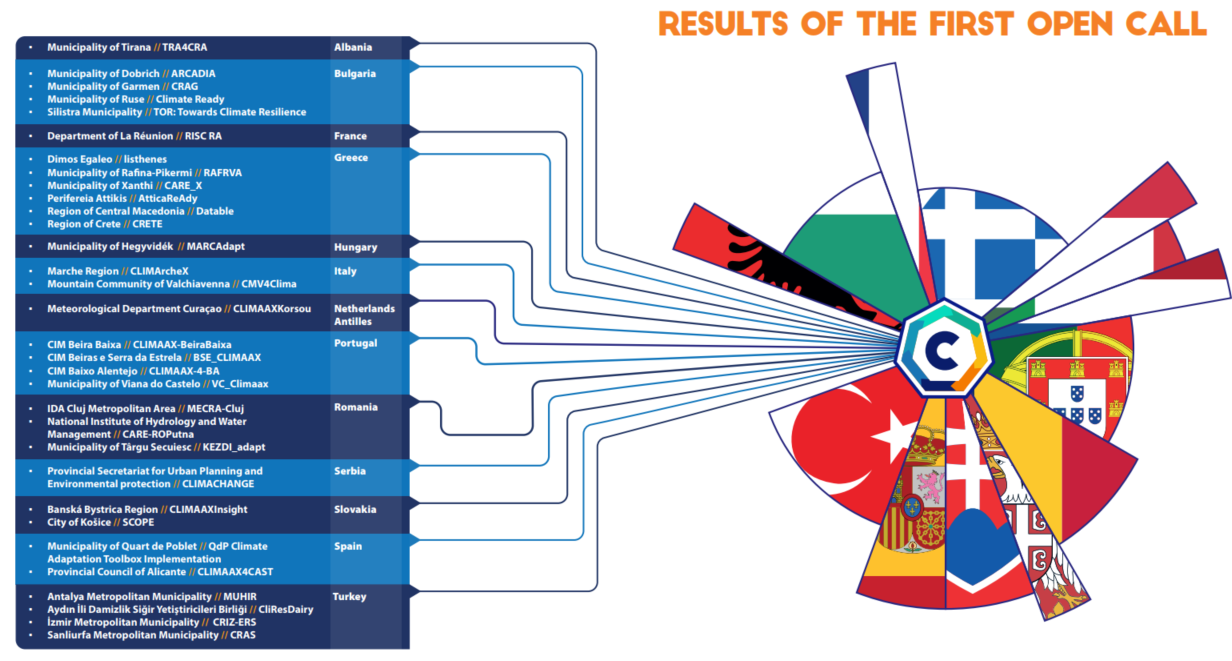
The Municipality of Târgu Secuiesc has launched a new important project titled “KEZDI_adapt”, part of the CLIMAAX program, aimed at analyzing the impact of climate change on the local community. The initiative, coordinated by Deputy Mayor Dr. Szilveszter Szabolcs, focuses on studying the effects of drought, heatwaves, and flooding on the population. The project is funded through a recently signed contract, marking a significant step in local adaptation to climate-related challenges.
About the CLIMAAX Program in Brief
Climate change can pose numerous new risks to community life. These include sudden heavy rainfall, hazards caused by drought, or damage from extreme heat, which can affect the population, natural and agricultural infrastructure, as well as the built environment. Assessing these risks and preparing to manage them is of major importance and requires the involvement of local authorities, professional and regulatory organizations, economic stakeholders, civil organizations, and the population.
The CLIMAAX project, defined by the phrase “CLIMAte risk and vulnerability Assessment framework and toolboX”, provides financial, analytical, and practical support for improving the management of climate-related emergency risks within the Horizon Europe program. To this end, the Polytechnic University of Catalonia (UPC) has developed a data-based risk management methodology and a set of tools, whose testing was successfully won by the Municipality of Târgu Secuiesc through the “KEZDI_adapt” project (“Developing a climate and emergency risk management strategy for the Municipality of Târgu Secuiesc, using state-of-the-art guidelines to enhance regional climate resilience”).
Regions from European countries were eligible to apply for this project, and a total of 119 proposals in English were submitted, of which 32 received funding. Despite the fierce competition, the proposal from Târgu Secuiesc was selected alongside regions such as Alicante (Spain), Antalya and Izmir (Turkey), Budapest’s 12th District – Hegyvidék, and Crete (Greece). In Romania, besides Târgu Secuiesc, funding was also obtained by the Cluj Metropolitan Area and the National Institute of Hydrology and Water Management.
Within the project, the City Hall team, with the involvement of internationally recognized experts in climate change and data science, will first learn how to use the CLIMAAX toolbox. Then, using available data and through extensive collaboration between experts and institutions, they will develop a risk management action plan for the territory of Târgu Secuiesc.
Managing risks generated by climate change will require the active involvement of economic stakeholders, institutions, civil organizations, and the local community. To facilitate this process, the project includes workshops designed to support the effective implementation and broad dissemination of the proposed objectives, tools, and results.
The implementation of the project is financially supported by the European Union, with nearly 150,000 euros.
More details about the CLIMAAX program can be found in English at https://www.climaax.eu/